

Subjects
 Political Science
 download catalogue
Representations



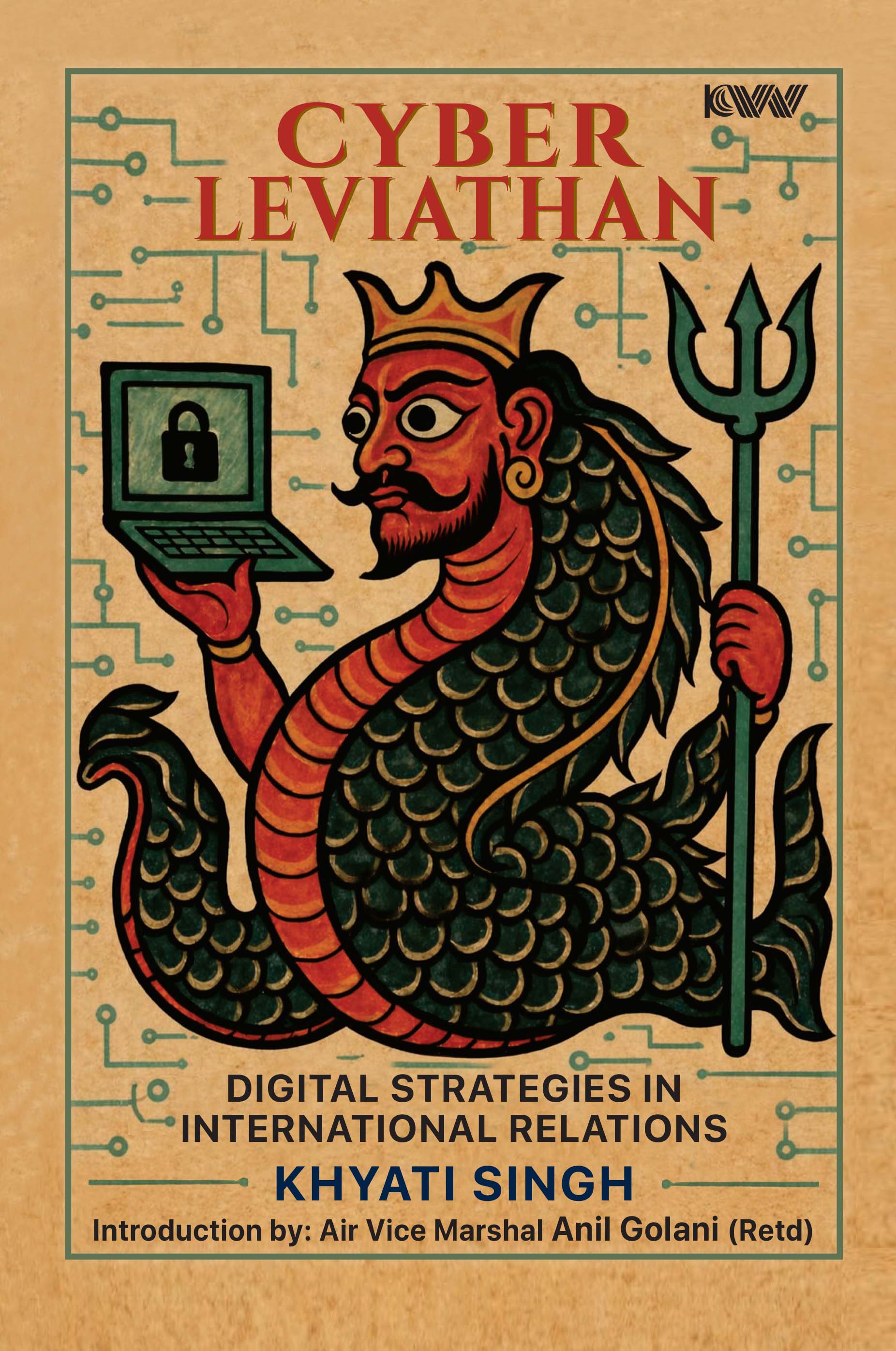
Cyber Leviathan: Digital Strategies in International Relations
Khyati Singh
Cyber Leviathan: Digital Strategies in International Relations examines how cyberspace is transforming power, sovereignty, and security in the twenty-first century. Moving from great powers to middle and small states, it maps how actors leverage cyber capabilities for espionage, coercion, and resilience, and how digital interdependence reshapes classic concepts like deterrence, sovereignty, and the security dilemma.
Anchored in a Hobbesian reading of the ‘state of nature’ in cyberspace, the book develops the organising idea of a Cyber Leviathan—an emergent, contested authority formed by states, tech corporations, institutions, and civil society that together struggle to impose order on a borderless, constantly contested digital realm. Through rich case studies on the United States, China, Russia, Israel, Iran, South Korea, Taiwan, and others, it shows how cyber power acts as a strategic equaliser, enabling revisionist, sanctioned, and small states to punch above their weight, even as highly digitised societies become increasingly vulnerable.
Bridging strategic studies, international relations theory, and real-world incidents—from Stuxnet and WannaCry to SolarWinds and election interference—Cyber Leviathan argues that cyber conflict has evolved from a supporting instrument to a primary arena of great-power rivalry and middle-power innovation. For policymakers, practitioners, and scholars, it offers both a conceptual framework and an urgent warning: in a world where every critical system is networked, national security now hinges on how effectively states can build, govern, and contest the evolving architecture of the Cyber Leviathan.