

Subjects
 Political Science
 download catalogue
Representations



Recent View(s)
- The Rise of Indian Military Power : Evolution of an Indian Strategic Culture (Second Edition)
- Those were The Days My Friend: Reminiscences of a Civil Servant
- India and the European Union: Perceptions of the Indian Print Media and Elites
- A World of Rights : Navigating the Global Landscape of Human Rights
- India and the Global South: History, Challenges, and Future in World Politics
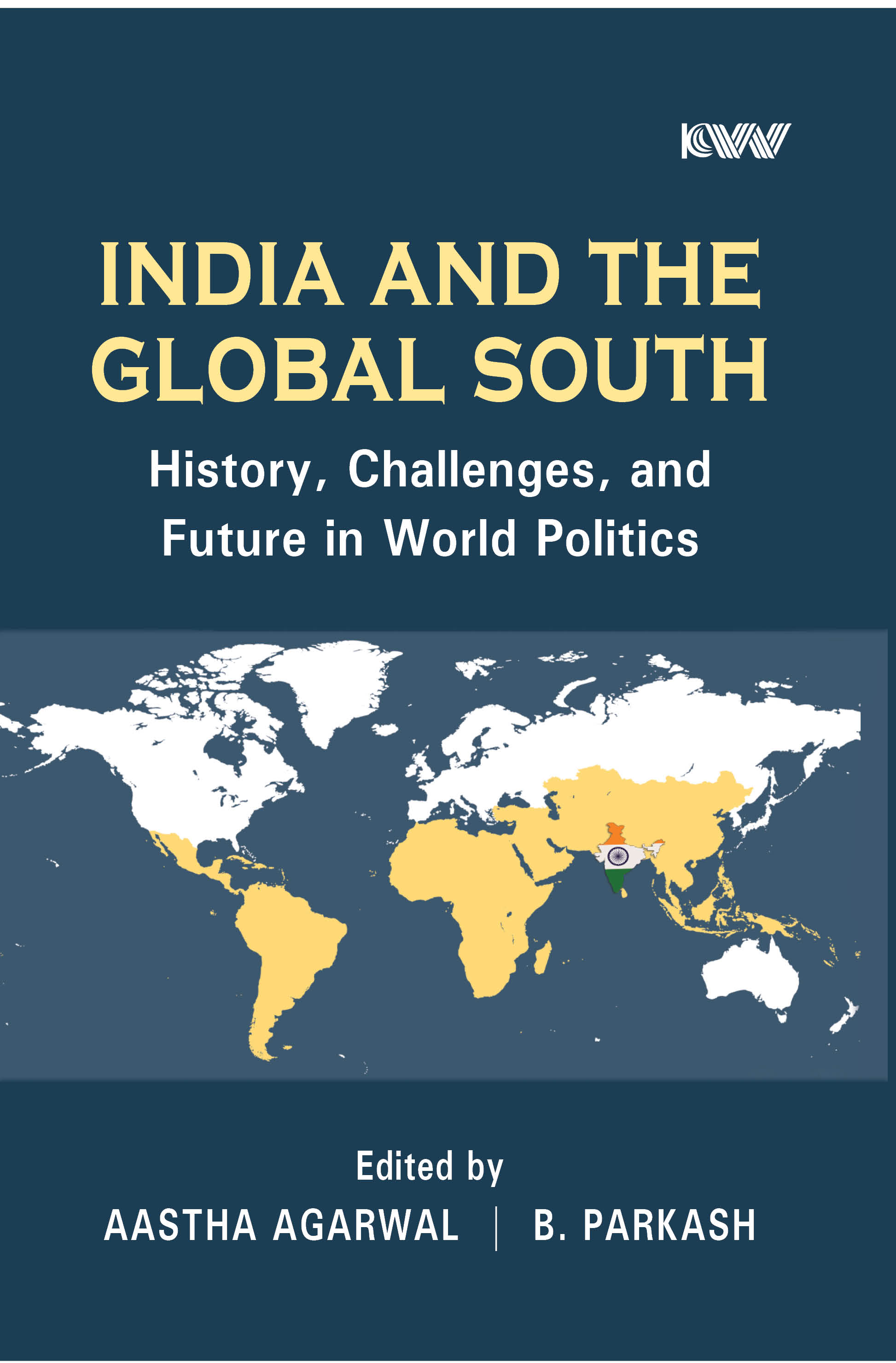
India and the Global South: History, Challenges, and Future in World Politics
Edited by: Aastha Agarwal | B. Parkash
India & the Global South: History, Challenges & Future in World Politics advances a clear and sustained argument: the Global South is no longer situated on the margins of world politics. It refuses to be defined by historical, post-colonial dependency but seeks to alter geopolitical reality by demanding multilateral reform and agency to partake in global agenda setting for both traditional and non traditional security issues.
Rather than treating the Global South as a unified political bloc, the book foregrounds differentiated capacities, strategic choices, and competing visions of order that shape Southern engagement in an increasingly fragmented international system. It pivots around India–Bharat not as a slogan but as a civilizational and strategic actor. It examines how leadership is claimed, performed, and resisted within Southern coalitions. India’s role is assessed through concrete practices: agenda-setting platforms such as the G20 and the Voice of the Global South, coalition diplomacy, development partnerships, and norm entrepreneurship in multilateral reform debates.
Structured as a cumulative argument, the chapters move from conceptual foundations and historical evolution to material and ideational sources of Southern power, before confronting internal asymmetries, rival external influences, and limits of collective action. The final section extends this analysis to emerging domains—digital governance, artificial intelligence, gender, and youth—demonstrating how new arenas of power will shape the future autonomy of the Global South.
Rigorously reviewed and tightly integrated, the volume offers a decisive intervention for scholars and policymakers seeking to understand not whether the Global South matters, but how it is actively reordering global politics.