

Subjects
 Political Science
 download catalogue
Representations



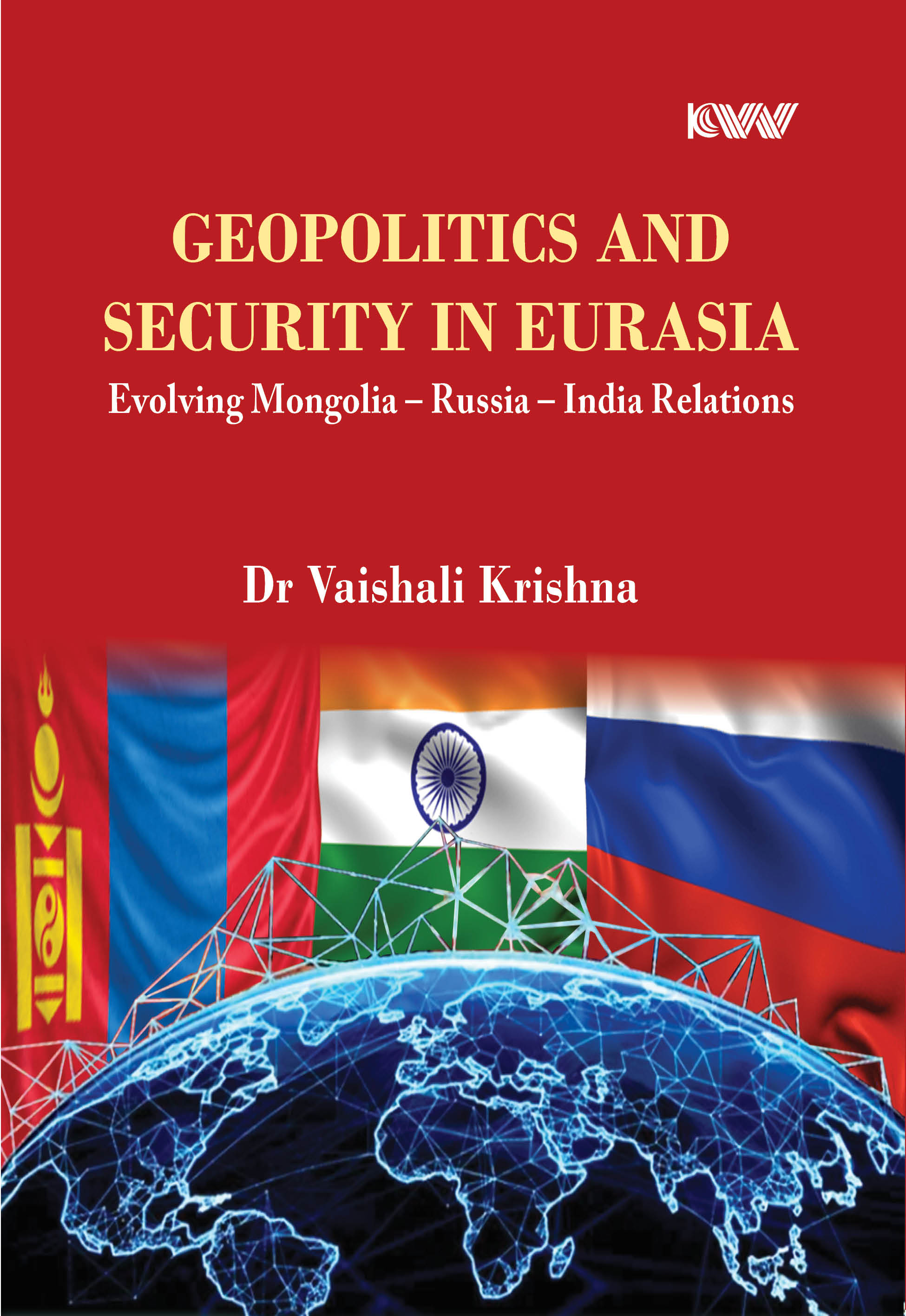
Geopolitics and Security in Eurasia: Evolving Mongolia – Russia – India Relations
Dr Vaishali Krishna
Geopolitics and Security in Eurasia: Evolving Mongolia–Russia–India Relations tries to make sense of what “Eurasia” actually means today by looking closely at how Mongolia, Russia, and India deal with one another. The book doesn’t treat the region as some grand geopolitical theory. Instead, it looks at how history, geography, and day-to-day political realities shape the decisions these countries make.
A lot of this becomes clearer once China’s expanding influence is taken into account. As the regional atmosphere becomes more complicated, the relationship between the three states gains weight. The book spends time on the practical side of their interactions—how each country tries to protect its own space and still cooperate when it needs to, even though their priorities don’t always match.
The collapse of the Soviet Union created a major turning point, and the book goes back to that moment to explain how the region’s political map was effectively rearranged. Russia still sits at the centre of much of what happens in Eurasia, which matters for both Mongolia—keen to rebuild the relationship while shedding some old Soviet baggage—and India, which has to juggle its traditional ties with Moscow along with its growing interest in Mongolia and its long-running issues with China.
Mongolia’s story gets special attention. Its democratic shift, economic reforms, and the “third neighbour” idea show how a relatively small country can carve out some breathing room even when it is physically boxed in. India’s deeper partnership with Mongolia, especially after 2015, fits neatly into this wider effort to diversify its diplomatic bets.
For India, none of this is straightforward. Old loyalties, new strategic calculations, and the constant push-and-pull with China all influence how it thinks about Eurasia. The book walks through how these pressures show up in India’s defence planning and diplomatic choices.
Altogether, the book offers a grounded, slightly messy, but realistic picture of how these three countries are trying to understand and navigate a Eurasia that keeps changing. It doesn’t present tidy answers, but it does a good job of showing why this triangular relationship matters and what it could mean for the region in the long run.